
Cuba Beneath Your Feet
Picture this. You're standing in Vinales - gorgeous valley, palm trees everywhere, a farmer clip-clopping past on a horse. Classic Cuba postcard moment. You take the photo, you move on.
But here's what nobody tells you: those enormous limestone towers rising behind you? They used to be a tropical coral reef. 150 million years ago. Before the Caribbean even existed.
Yep. Cuba is that old.
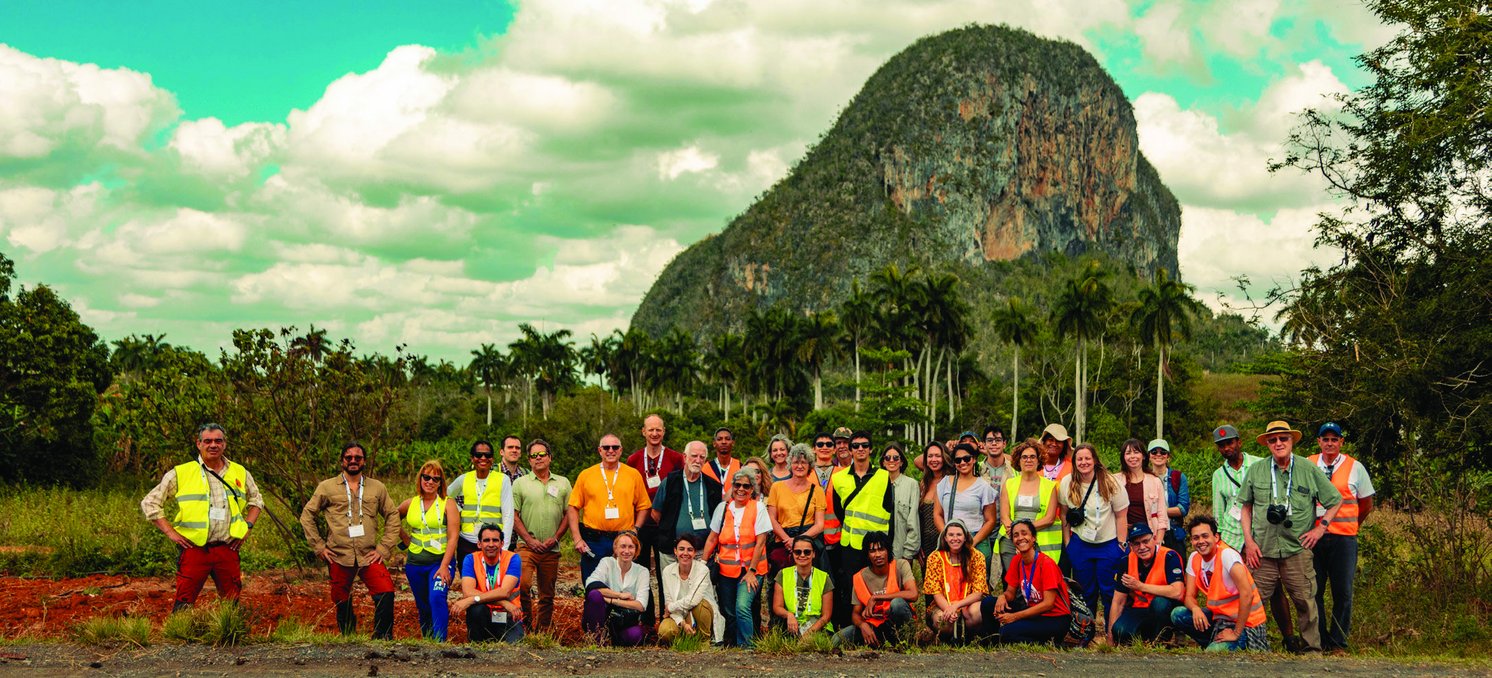
When 40 Scientists Chose Cuba Over Everywhere Else
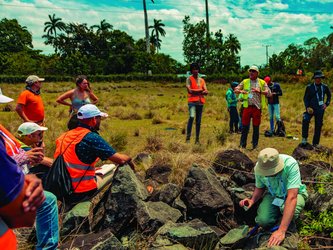
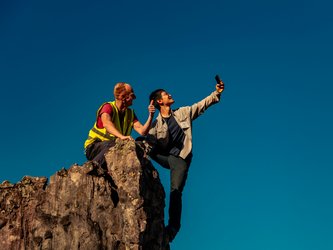
This April, the Geological Society of America - one of the world's most prestigious science organisations - sent 40 researchers from 10 countries to Cuba for a week. Not to Cancun. Not to Costa Rica. Cuba. Because, apparently, the rocks here are extraordinary. The group included scientists from France, Spain, Brazil, the UK, the US, and beyond. Senior professors, PhD students, early career researchers - all of them swapping their laptops for field boots and heading straight into the Cuban countryside.
"They didn't come for the mojitos. They came because Cuba holds answers to some of geology's biggest open questions."
Here's the part we're proud of: Sprachcaffe organised the trip on the ground. Our guide Carielys Clermont Sanchez led the group through the country, and our team -- Dayima Leon Sanchidrian and Juan Camilo Cruz - handled the logistics that made the whole thing run. Seven days, 40 scientists, two UNESCO sites, and a serpentinite mélange. No small task.
The Geological Society of America acknowledged our team by name in the official scientific publication. Their exact words?
"We also thank Carielys Clermont Sanchez, our enthusiastic tour guide from Sprachcaffe, and... Dayima Leon Sanchidrian and Juan Camilo Cruz from Sprachcaffe for their crucial support in organizing the field forum in Cuba." (Rojas-Agramonte et al., GSA Today, July 2025, p. 34)
Enthusiastic. Crucial. We'll take both.
Vinales: The Place Everyone Visits, and Almost Nobody Actually Sees
Let's talk about those towers. The mogotes, as they're called locally, are the defining image of Vinales - and of western Cuba as a whole. UNESCO gave the valley World Heritage status partly because of them. But most visitors just photograph them and head to the tobacco farm.
Here's the actual story. What you're looking at is what's left after millions of years of rain dissolved the rock around it. The softer limestone dissolved away. The harder stuff stayed. What remains are these incredible columns - some of them 300 metres tall - standing in a flat green valley like something out of a fantasy film.
The scientists spent two full days here. Two days. Reading rock formations that span 80 million years of Earth history.
For you, this means one thing: don't rush Vinales. Give it a second day. Walk a bit further than the main lookout. Ask your guide what you're actually looking at. The valley rewards curiosity.
Santa Clara, Trinidad, and the Cuba the Tourists Haven't Found Yet
On day three, the group packed up and headed east - into the Cuba that almost no international traveller ever sees.
The central and southern parts of the island are where the geology gets wild. The Escambray mountains in south-central Cuba contain rocks that were once buried 60 kilometres underground. Literally dragged into the Earth during an ancient collision of tectonic plates, squeezed and transformed, and then slowly pushed back to the surface over millions of years.
You can hold a piece of rock that has been 60 kilometres underground. That is not a normal Tuesday.
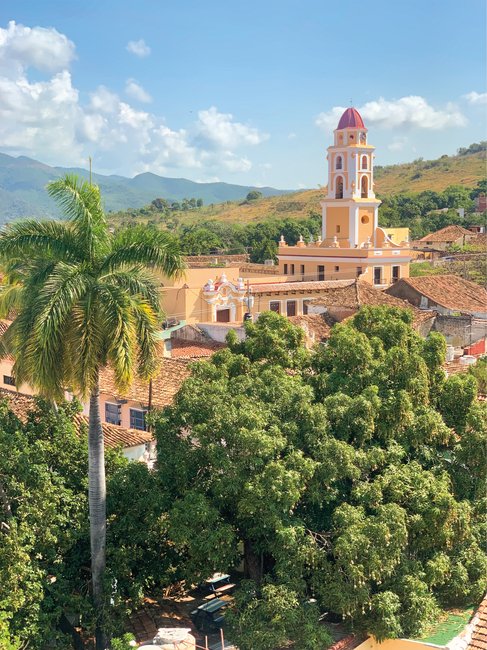
But it's not just the rocks. This route takes you through Santa Clara - a city full of revolutionary history and genuinely good food - and down to Trinidad, one of the best-preserved colonial towns in the entire Caribbean. Cobblestone streets, pastel-coloured houses, live music drifting out of every doorway. Also a UNESCO World Heritage Site, in case you're collecting them.
On the way, the group stopped at the Valle de los Ingenios - the Valley of the Sugar Mills - where the ruins of 19th-century sugar plantations still dot the hillsides. It's one of those places that makes you stop talking and just look.
So What Does This Mean for Your Cuba Trip?
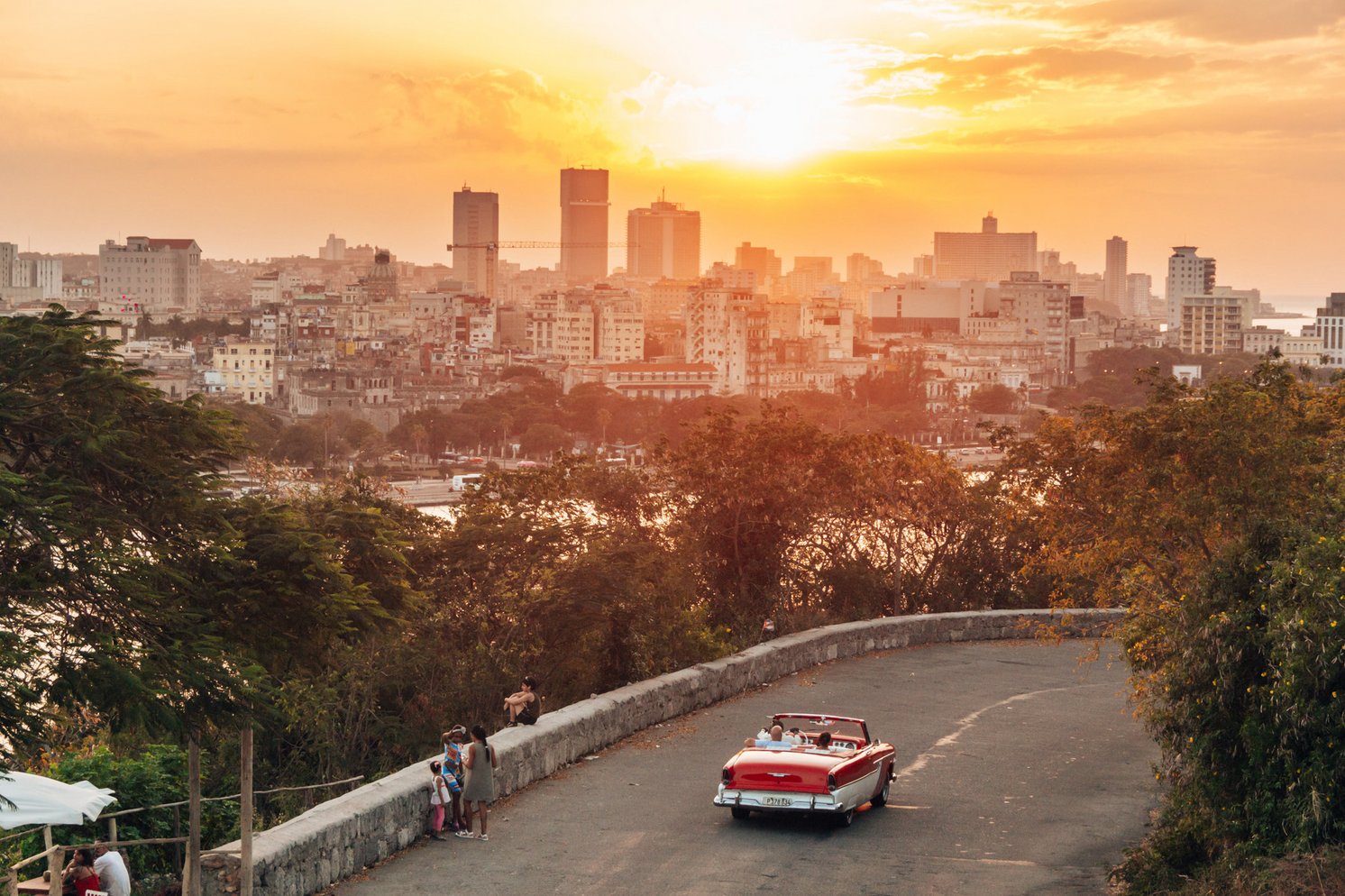
Here's our honest take: most Cuba itineraries miss the best parts of the island.
Havana is incredible, obviously. Varadero beach is beautiful. But Cuba is also Vinales at dawn when the mist sits in the valley. It's the winding road through the Escambray mountains. It's Trinidad on a warm evening with nowhere particular to be.
The route the scientists followed - Havana to Vinales, then east to Santa Clara and south to Trinidad - is basically a perfect 7-day itinerary. They did it for the rocks. You can do it for everything.
Cuba is one of those places that gets better the more you pay attention. The landscape, the history, the culture - it all layers up in a way that surprises you. You think you know what kind of trip you're taking, and then you find yourself standing in a valley that used to be a coral reef, 150 million years ago, wondering how you nearly missed this.
Source
Rojas-Agramonte, Y., Garcia-Casco, A., Iturralde-Vinent, M. A., Núñez-Cambra, K. & Hu, H. (2025): The Geology of Cuba: Key for the Tectonic Evolution of the Caribbean-North American Plates. Thompson Field Forum Report. GSA Today, July 2025, pp. 32-34. Geological Society of America. www.ugr.es/~agcasco/TFF2025Cuba/
Ready to go deeper into Cuba?
Most Cuba trips stick to the same three stops. We think you deserve more than that.
We run trips through western Cuba - Havana, Vinales, Pinar del Rio - as well as routes east into the island's interior: Santa Clara, the Escambray mountains, Trinidad. The landscapes scientists fly across the world to study. The Cuba that stays with you long after the tan fades.
Our guides know the stories behind what you're looking at - why that valley is shaped the way it is, where the locals actually eat. One of them has even been cited in a scientific publication. We think that counts for something.
Get in touch and let's plan your Cuba trip.
Plan your dream trip
Start planning your trip today - it only takes 2 minutes!
Don't miss the chance to make your dream trip a reality! Contact our experienced travel consultants now and let them inspire and advise you for your trip. Take the first step towards your unforgettable adventure!
Travelling Central America
A trip to Central America is so much more than rainforests, volcanoes and dream beaches. Look forward to colourful colonial cities, warm-hearted people, exotic wildlife, living traditions and real adventures between the Pacific and the Caribbean.