
Travelling Peru - thousands of years of heritage still alive today
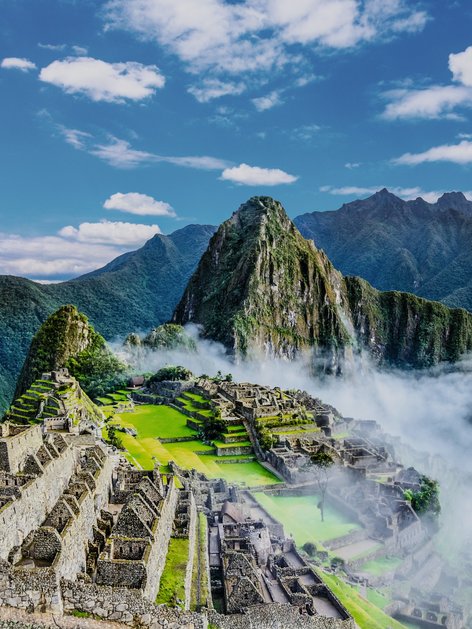
It is not only the geographical diversity that characterises Peru's regions in terms of nature, culture and gastronomy, but also the strong connection to past times that attracts the attention of visitors: immerse yourself in the world of the former Tawantinsuyu, the Inca empire, and experience in Cuzco and Machu Picchu how customs and traditions still tell of the great influence of the empire today.
The beauty and diversity of nature, whether on the coast, in the Andes or in the rainforest, can be explored by land and water. Spend the night in the jungle, drift down the Amazon by boat or sail on the highest navigable lake in the world: Lake Titicaca. Lima is also worth a visit with its cultural and gastronomic offerings.
Our Peru tours can be extended flexibly on request - additional days and services can be booked individually. Please write to us if you would like to customise your trip!
Peru's sights
Discover the fascinating sights of Peru! Visit the legendary Machu Picchu, hike through the sacred valley of the Incas and marvel at the impressive Nazca lines. Experience the vibrant culture in Cusco and enjoy the breathtaking beauty of Lake Titicaca. Peru offers a rich history and unforgettable experiences.
About Peru


Peru is a country with 31.24 million inhabitants, of which just under a third live in the capital, 9.9 million to be precise. In this respect, Lima also includes the harbour city of Callao (approx. 1 million inhabitants), as the two cities merge into one another, but Callao is politically independent. The political head of state of the Peruvian Republic has been President Martín Alberto Vizcarra Cornejo since 2018.
The population is 47% indigenous and 37% mestizo, with 13% of European origin and 3% of African and Asian origin.
In addition to Spanish, the indigenous languages Quechua and Aymara are also official languages. Over 85 % are native Spanish speakers. Quechua, which has around 32 different dialects in Peru alone, is the native language of around 13% of the Peruvian population. Throughout South America, around 10 million people still speak this language.
The towns of Pozuzo and Oxapampa are home to descendants of Tyroleans and Rhinelanders who settled here in the second half of the 19th century. Cut off from the rest of the population for a long time, they were able to maintain their customs and language.
Peru is in the UTC -5 time zone and does not switch to summer time. The time difference to Germany is therefore -7 hours during German summer time and -6 hours during winter time.
Entry and exit
For German travellers, entry is possible with a valid passport, which must be valid for 6 months at the time of entry. A temporary passport is also accepted. Children require their own valid children's passport. An identity card is not sufficient. A maximum length of stay of 183 days is possible in Peru.
In addition, an entry card ("Tarjeta Andina de Migración") must be filled out upon entry. In some cases you will be asked for your return flight ticket. You should ensure that the intended minimum length of stay is entered in your passport and on the entry card. Normally 90 days are entered, rarely only 30 days. This cannot be extended retrospectively. If the entry card is lost or the length of stay is exceeded, a fine is to be expected.
On arrival at the airport in Lima, your suitcase may be checked again after it has been accepted. This is done on a random basis.
Duty-free import for:
- Items for personal use (clothing, medicine, work materials, etc.)
- Up to 400 cigarettes, 500 g pipe tobacco, 50 cigars (> 18 years)
- 3 litres of alcoholic beverages (> 18 years)
- Gifts or cash up to USD 300 (> 14 years)
Further information can be found on the website of the Federal Foreign Office.
When re-entering Germany, the general German entry regulations apply. You can find more information on this at www.zoll.de.
Currency
The currency in Peru has been the sol (pl. soles) since 2015; from 1991 to 2015 it was called the nuevo sol in contrast to the viejo sol. 1 sol is 100 céntimos (cents), whereby there are 5, 10, 20 and 50 cent, as well as 1, 2 and 5 soles coins and 10, 20, 50, 100 and 200 soles notes. The 1 cent coins were withdrawn from circulation in 2011. In smaller shops or towns, 100 and 200 soles notes may not be accepted from time to time. The exchange rate is currently around 4.12 soles for 1 euro.
Cash can be withdrawn from ATMs using a credit card, either in soles or in US dollars. EC card use is only possible to a limited extent. It is often possible to pay directly with dollars. In larger cities such as Lima, Cuzco, Arequipa and Puno, euro notes can be exchanged in an exchange office ("casa de cambio").
In Germany, money can be exchanged before travelling. However, it is only worthwhile doing this if you have a certain amount of money. It is easier to withdraw money directly on arrival at the airport.
Landscape & Nature
The Peruvian landscape is characterised by great diversity, which also has an impact on nature, flora and fauna, and therefore also on the way of life of the inhabitants. The country is divided geographically into three regions: the coastal area (Costa), the Andes and the Andean highlands (Sierra) and the rainforest (Selva).
Peru's coastal strip is 3,079 km² long, only 15 km wide at its narrowest point near Arequipa and 180 km wide at its widest point in the north near Piura. The entire coastal region consists almost entirely of desert. Various seal species, penguins, whales and dolphins can be spotted off the coast.
In the Sierra, it is the Cordillera that determines the climate: A subtropical mountain climate prevails here. At an altitude of over 5,000 metres, everything is covered in ice, although global warming is causing a decline. There are 20 mountain ranges and 30 snow-covered peaks (over 6,000 metres) where the snow never melts. The highlands are home to alpacas and llamas, as well as their wild relatives the guanacos and vicuñas. You can also see Andean condors circling in and above the gorges. With a wingspan of up to 3.20 metres, it is the largest bird of prey in the world. Smaller animals such as guinea pigs, skunks and chinchillas also have their habitat here.
When talking about the rainforest, a distinction is often made between Selva Alta and Selva Baja. The latter term is used for the low-lying Amazon region, which also includes the regions of Ucayalí and the west of Madre de Dios. The "high" rainforest (Selva Alta) is located on the eastern side of the Andes and can reach up to an altitude of 3,600 metres. The Selva covers an area of around 782,880 square kilometres and is home to around 260 species of amphibians and around 290 different species of mammals: Caimans, sloths, monkeys and the rare pink dolphin live here. The flora should not be overlooked either: There are over 7,300 plant species in the Peruvian rainforest alone.


Climate & best time to travel


The climate in Peru varies greatly from region to region. The climate on the coast varies only slightly, but is mainly dry; in the north you can speak of a dry tropical climate. Depending on the places you want to visit in Peru, you should consider the summer or rainy season, especially for the rainforest region or hikes in the Andes, for example in Cuzco or Machu Picchu.
October to May are considered the spring and summer months on the coast, although it can also get very warm in Lima. Lima is surrounded by desert, so the water supply in the capital of Peru is heavily dependent on rainfall in the Andes. As you move away from Lima along the coast, it gets warmer in every direction. In winter (from May to September), a dense fog, "la garua", lies over Lima; the humidity rises to up to 90 %. The temperature in Lima can drop to 12 °C in winter, and the cool climate is often accompanied by drizzle.
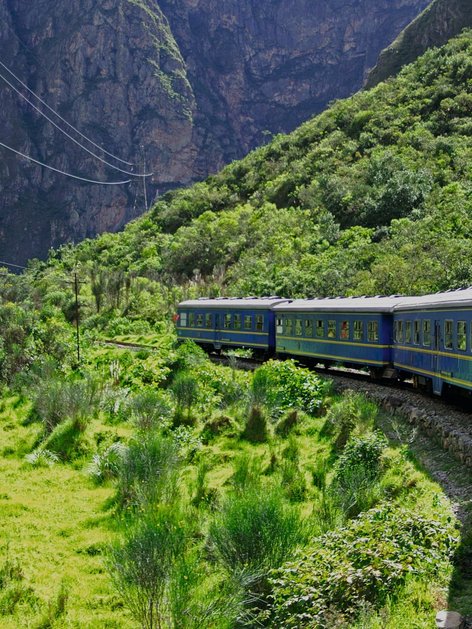
Conversely, May to October is the best time to visit the Andean highlands, as there is little rainfall. If you would like to visit Cuzco and Machu Picchu, please note that there is heavy rainfall from December to May. In February, this sometimes even leads to the closure of the Inca Trail and the railway tracks of the train to Machu Picchu become impassable.
The dry season in the rainforest (Peruvian lowlands) also lasts from April to October, with temperatures rising to over 35°C. There is heavy rainfall in March. In the southern jungle, cold "friaje" winds blow between May and August and the temperature drops to around 10 °C. In the north, it is constantly hot in the rainforest.
Culture
81 % of the population state that they are Catholic, around 12.5 % Protestant and 3.3 % state another religion. It is not surprising that the proportion of Catholics and Christians in the countryside is comparatively lower than in the cities. The original Andean faith is even more strongly represented here, which emphasises mutual respect, helping those in need and, of course, respect for nature. Pachamama, Quechua for Mother Earth, a deity from the Inca culture, is still worshipped in the Andes today. Rituals continue to be performed alongside the Christian religion. In Peru, the Pachamama is often equated with the Virgen de la Candelaria (Virgin of Candelaria).
The survival of rituals and architecture of indigenous peoples who have since died out, the mixing after the Spanish Conquista and later waves of migration from Asia, Africa and European countries make Peru's culture very diverse. This is evident not only in the architecture, but also in the gastronomy, music, dance and world view. Especially in larger cities such as Lima, Cuzco, Arequipa or Cajamarca, the baroque architectural style of the colonial era is clearly recognisable. The musical styles and instruments vary depending on the region: cumbia (Amazon region), huayno (Andes) and marinera (coast/Lima) are the best-known representatives. Cultures can also be differentiated in terms of clothing: Western clothing is worn on the coast and in larger cities. In rural Andean areas, you will find women wearing several skirts (polleras) on top of each other and scarves (fajas) in bright colours, some of which are also used to carry food or small children working in the fields. Various handicrafts of different influences and clothing made from alpaca or llama wool can be bought at the markets.


Food & Drink


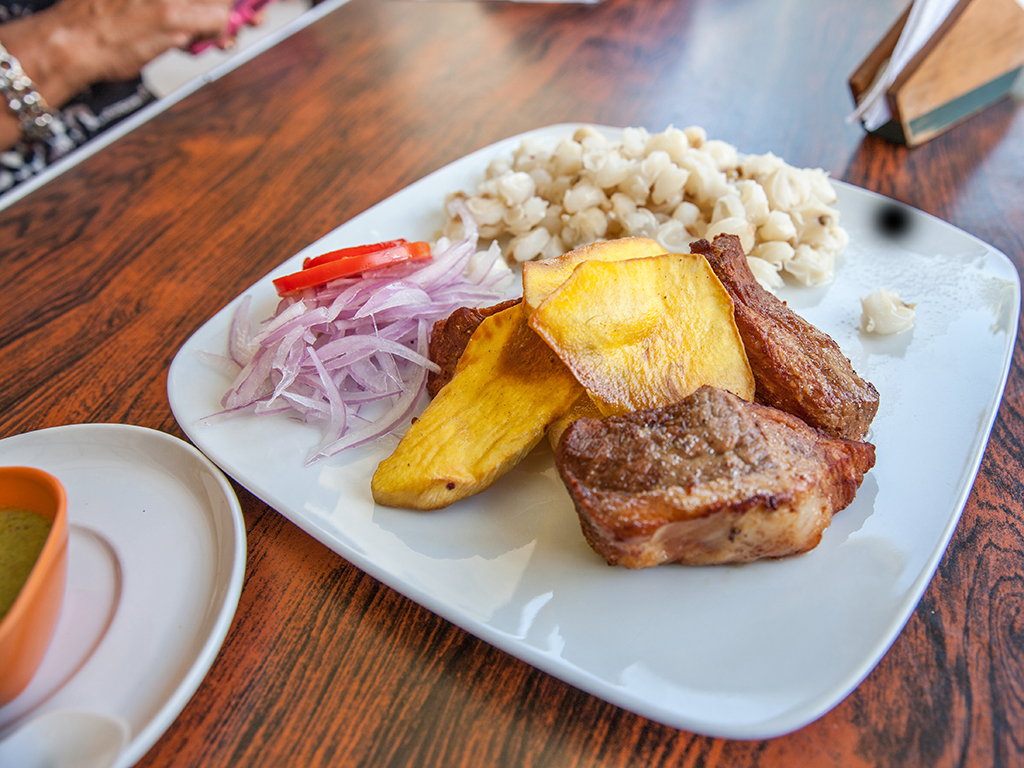

Peru has impressed on a gastronomic level in recent years. Some of the best chefs in the world come from Peru. Three restaurants in Lima alone are ranked among the top 50 in the world. The variety of dishes, probably around 490 different ones in total, from the different regions of Peru makes its cuisine a culinary experience. A distinction is made between four different cuisines: cocina marina, criolla, andina and de la selva. A lot of fish and seafood is used, especially on the coast, but also on Lake Titicaca and along the rivers of the rainforest. The well-known ceviche is unusual for many people when they first try it, as the dish consists of raw fish slices in lime juice, aji (a type of chilli) and onions. It is accompanied by camote (sweet potato) and choclo (a type of corn).
An example of Creole cuisine is ají de gallina. The dish consists of minced chicken in a creamy ají sauce and is served with rice and potatoes. There are many other dishes with meat cooked, roasted, on a spit and potato dishes to discover. It is worth mentioning that over 3,000 types of potato are native to Peru. But be careful with mondonguito: if you don't like eating offal, you should avoid this dish.
Originally, Andean cuisine had little meat, but lots of potatoes, corn and roots. Nowadays, cow, sheep and pork are also eaten, as well as llama and alpaca meat in places at very high altitudes. The cuy, our pet guinea pig, originally comes from the Andes and is considered a farm animal in Peru, so it belongs on the plate just as much as chicken does here.
The dishes from the rainforest are characterised differently due to the geography and therefore the flora and fauna. Huanganda, a type of wild pig, various fish, but also beetles and tapirs are prepared here. Yuca (manioc) and bananas are also prepared in different ways.
The many different desserts available in Peru should also not go unmentioned: Mazamorra Morada (made from purple corn) is often served with rice pudding, Suspiro Limeño (dessert made from sugar, egg yolk and milk) or Picarones (deep-fried, usually made from flour and pumpkin served with honey) should definitely be tried. There are said to be over 250 traditional desserts in Peru. Culinary classics and novelties are presented every September in Lima at Mistura, Latin America's largest gastronomy fair.
There are some unique drinks to be found in Peru. Chicha Morada, made from purple corn, pineapple and cinnamon, is drunk cold and stands in stark contrast to the neon yellow Inca Kola, a soft drink that long ago displaced Coca-Cola from the number one spot in Peru. You can get freshly prepared juice in all variations at many stands or in pubs. The best-known alcoholic drink is pisco, a distillate made from grapes, usually over 40 %, which can be drunk straight, but is mainly drunk as a long drink or cocktail, such as the pisco sour (with lime juice) or the chilcano de pisco.